
Tossing and Turning? How High Humidity is Ruining Your Sleep in Panama City (and How to Fix It)
July 25, 2026 1:59 pmIf you’ve ever woken up feeling sticky, restless, or overheated during a Gulf Coast summer night, you’re not alone. High humidity is one of the biggest reasons homeowners in Panama City struggle to get quality sleep, even when the thermostat says the room should feel comfortable.
Quick Answer
Yes, high indoor humidity can make it much harder to sleep. Excess moisture in the air reduces your body’s ability to cool itself through perspiration, making bedrooms feel warmer than the actual temperature. In Panama City, where outdoor humidity often stays high throughout much of the year, keeping indoor humidity between 30% and 50% can significantly improve sleep comfort, indoor air quality, and HVAC performance.
What Local Readers Should Know
-
Indoor humidity above 60% can make your bedroom feel warmer than the thermostat setting.
-
Gulf Coast moisture affects homes throughout Panama City, Lynn Haven, Callaway, and Parker for much of the year.
-
Your air conditioner helps remove humidity, but an oversized or poorly maintained system may not dehumidify effectively.
-
Poor humidity control can contribute to musty odors, condensation, and mold growth inside your home.
-
Small HVAC maintenance issues can become noticeable first through uncomfortable, restless nights.
Why This Matters Locally
Living along Florida’s Emerald Coast means enjoying beautiful beaches, but it also means dealing with consistently high humidity. Warm air flowing inland from St. Andrews Bay and the Gulf of Mexico carries significant moisture, especially during late spring, summer, and early fall.
Many homes throughout Bay County remain tightly sealed for energy efficiency, which helps keep conditioned air inside but can also trap excess moisture when an HVAC system isn’t operating efficiently. Afternoon thunderstorms, tropical weather systems, and long cooling seasons all increase the workload on residential air conditioning systems.
Complete Air Conditioning & Refrigeration Inc. works with homeowners throughout the area who experience indoor comfort issues that extend beyond temperature alone. We often find that improving humidity control makes bedrooms feel noticeably cooler without dramatically lowering the thermostat.
Local Data and Field Observations
According to the National Weather Service, communities along Florida’s Panhandle regularly experience high relative humidity during the warmer months. Combined with temperatures that frequently climb into the upper 80s and 90s, these conditions create elevated heat index values that make both outdoor and indoor environments feel hotter.
From our field experience, many homeowners assume their air conditioner is failing when the real issue is poor moisture removal. The system may still cool the air, but excess humidity leaves the home feeling damp and uncomfortable.
How High Humidity Affects Your Sleep
High humidity disrupts sleep because it makes it harder for your body to regulate its temperature throughout the night.
As you sleep, your body naturally cools itself. Sweat evaporates from your skin, carrying away heat. When indoor humidity is too high, sweat evaporates much more slowly, leaving you feeling warm and clammy.
Common nighttime effects include:
-
Difficulty falling asleep
-
Frequent waking during the night
-
Night sweats
-
Sticky sheets and bedding
-
Feeling tired despite sleeping several hours
-
Morning headaches from poor sleep quality
If your bedroom consistently feels warmer than the rest of the house, humidity could be playing a larger role than temperature alone.
Local Impact on Homes in Bay County
High indoor humidity affects more than just your comfort. It also impacts your home.
Excess moisture can encourage mold and mildew growth in bathrooms, closets, and around air vents. Wood flooring may expand, window condensation becomes more common, and musty odors often develop.
Older homes in neighborhoods throughout Panama City may have less effective insulation or ductwork, while newer homes can experience humidity issues if HVAC equipment is oversized or improperly balanced.
Every home is different, but moisture problems are a common concern throughout this coastal region.
Warning Signs Your Home Has Excess Humidity
Several symptoms suggest your indoor humidity may be too high.
-
Your bedroom feels muggy even with the AC running.
-
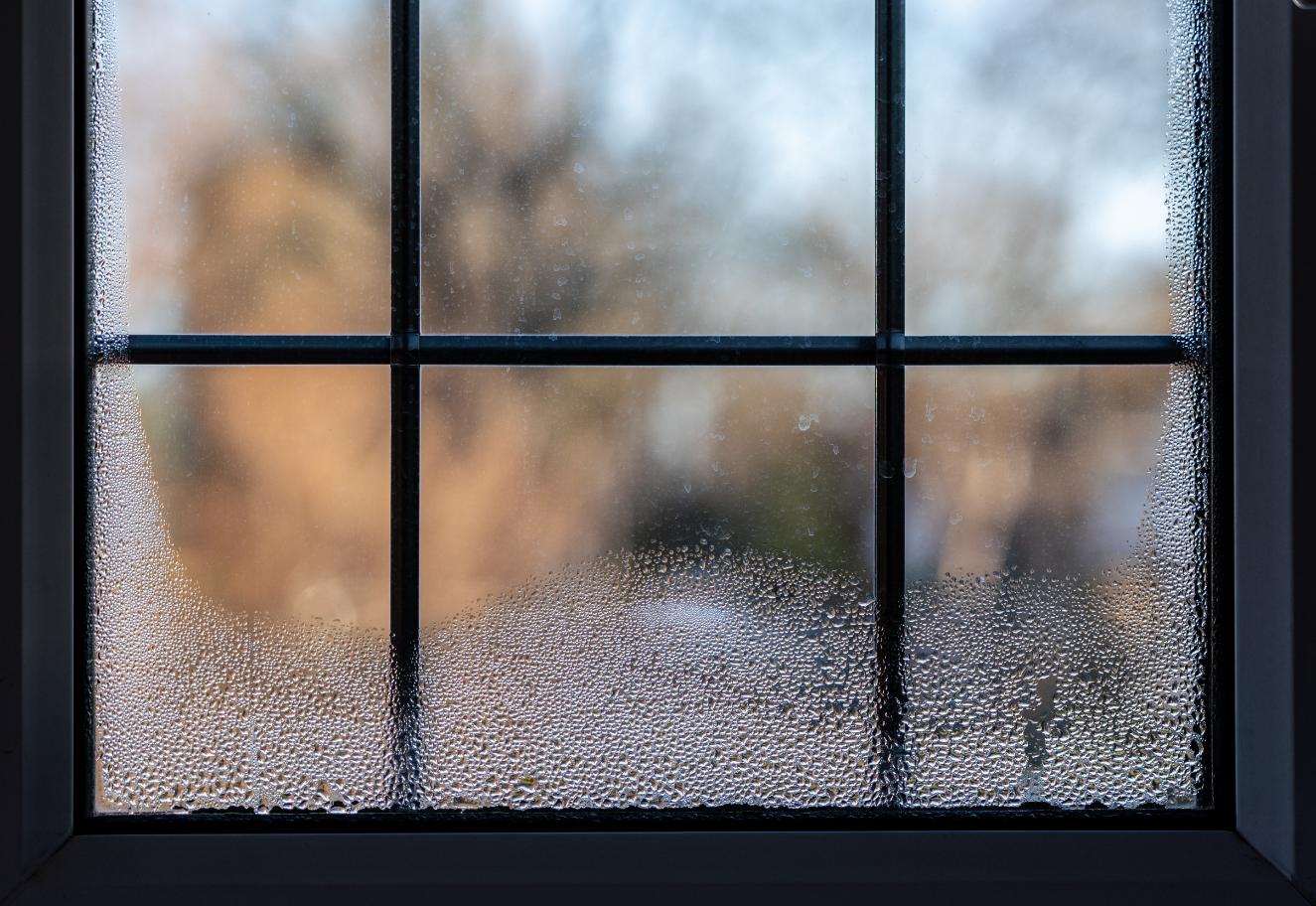
Windows develop condensation.
-
You notice a persistent musty smell.
-
Sheets or towels never seem completely dry.
-
Mold spots appear around vents or windows.
-
The thermostat reaches the set temperature, but the home still feels uncomfortable.
-
Allergies seem worse indoors.
-
The air feels heavy or sticky.
These issues often become more noticeable during Panama City’s longest cooling season.
When to Call a Professional
Minor humidity changes can often be monitored with an inexpensive indoor hygrometer, but persistent problems deserve professional evaluation.
If your indoor humidity regularly stays above 60%, your air conditioner runs constantly without improving comfort, or you notice mold growth or condensation, it’s time for an HVAC inspection.
A technician can determine whether the issue involves:
-
Improper system sizing
-
Dirty evaporator coils
-
Restricted airflow
-
Refrigerant issues
-
Duct leakage
-
Drainage problems
-
The need for supplemental whole-home dehumidification
Identifying the cause early can prevent larger comfort and moisture problems later.
Common Local Causes of High Indoor Humidity
Several conditions contribute to excess indoor moisture in this area.
1. Coastal Climate
Warm Gulf air naturally contains more moisture than inland climates.
2. Oversized Air Conditioners
A system that cools too quickly may not run long enough to remove adequate humidity.
3. Dirty HVAC Components
Restricted airflow reduces the system’s ability to dehumidify efficiently.
4. Air Leaks
Warm, humid outdoor air can enter through gaps around doors, windows, or ductwork.
5. Heavy Summer Rainfall
Frequent storms raise outdoor humidity, making indoor moisture control even more challenging.
Prevention and Maintenance
The best way to control humidity is through regular HVAC maintenance and smart home habits.
Helpful steps include:
-
Replace air filters regularly.
-
Keep supply and return vents unobstructed.
-
Schedule annual air conditioning maintenance before peak summer weather.
-
Use bathroom and kitchen exhaust fans.
-
Seal obvious air leaks around windows and doors.
-
Monitor indoor humidity levels throughout the summer.
-
Avoid lowering the thermostat dramatically if humidity remains high, since the underlying issue may not be temperature.
Routine maintenance helps ensure your cooling system removes both heat and moisture effectively.
What Results Can You Expect?
Professional HVAC maintenance and proper humidity control can noticeably improve indoor comfort.
Many homeowners experience:
-
Better sleep quality
-
More consistent indoor temperatures
-
Reduced sticky feeling indoors
-
Improved energy efficiency
-
Fewer musty odors
-
Lower risk of mold growth
-
Reduced strain on HVAC equipment
While every home is different, improving humidity control often makes a house feel cooler without lowering the thermostat several degrees.
Common Mistakes
Mistake: Turning the Thermostat Lower
Consequence: Higher energy bills without solving the humidity problem.
Better Approach: Have the system evaluated for proper moisture removal.
Mistake: Ignoring Dirty Air Filters
Consequence: Reduced airflow limits dehumidification.
Better Approach: Replace filters according to manufacturer recommendations.
Mistake: Assuming Every Humidity Problem Needs a New AC
Consequence: Spending more than necessary.
Better Approach: Have the existing system inspected before considering replacement.
Common Local Scenario
A homeowner in the Panama City area notices the thermostat consistently reaches 74 degrees by bedtime, yet the bedroom still feels warm and sticky. Windows begin collecting condensation each morning, and everyone wakes up uncomfortable.
During an HVAC inspection, the issue turns out to be reduced airflow from a dirty evaporator coil combined with restricted airflow through an overdue air filter. After cleaning and maintenance, humidity levels improve, and the home feels significantly more comfortable even at the same thermostat setting.
Related Service Solutions
Several HVAC services can improve indoor humidity control:
-
Air conditioning maintenance
-
AC repair
-
Air conditioning replacement when equipment is improperly sized or aging
-
Indoor air quality improvements
-
Whole-home dehumidifier installation when appropriate
-
Airflow and duct system evaluations
Comparing Your Options
| Option | Best For | Limitations |
|---|---|---|
| Portable dehumidifier | One room | Limited coverage and requires regular emptying |
| Regular HVAC maintenance | Most homes | Requires seasonal service |
| Whole-home dehumidifier | Persistent humidity issues | Higher initial investment |
| Lowering thermostat | Temporary comfort | Higher energy costs and may not solve humidity |
Service Areas
We proudly serve homeowners throughout Panama City, Lynn Haven, Callaway, Parker, and surrounding Bay County communities. Our understanding of the local climate helps us recommend solutions that work for Florida’s unique humidity challenges.
The Cost of Ignoring High Humidity
Waiting too long to address indoor humidity can lead to higher utility bills, increased HVAC wear, mold growth, unpleasant odors, and ongoing sleep disruption.
Resolving humidity issues early often helps protect both your comfort and your home’s indoor environment.
Frequently Asked Questions
Why does my bedroom feel hot even when the thermostat says 72 degrees in Panama City?
High indoor humidity can make your body feel warmer than the actual air temperature. Excess moisture slows sweat evaporation, reducing your body’s natural cooling process.
What is the ideal indoor humidity level for homes in Bay County?
The ideal indoor humidity range is generally between 30% and 50%. Staying within this range helps improve comfort while reducing the potential for mold growth.
Can my air conditioner remove humidity by itself?
Yes, a properly functioning air conditioner removes both heat and moisture. However, maintenance issues, improper sizing, or aging equipment can reduce its dehumidification performance.
Does coastal weather make humidity worse indoors?
Yes. Living near the Gulf of Mexico means outdoor air naturally contains more moisture, especially during summer and after afternoon storms.
Should I buy a portable dehumidifier?
A portable unit may help a single room, but recurring humidity throughout the home often indicates an HVAC issue that should be evaluated professionally.
Can high humidity increase my energy bills?
Yes. Many homeowners lower the thermostat to compensate for muggy indoor conditions, causing the cooling system to run longer and use more electricity.
Closing
Comfortable sleep depends on more than just the temperature setting. In Panama City’s humid climate, controlling indoor moisture is just as important as cooling your home. Understanding how humidity affects your HVAC system and your comfort can help you sleep better while protecting your home year-round.
Sleep Better with Better Indoor Comfort
If your home feels cool but never truly comfortable, we’re here to help identify the cause and recommend practical solutions for your indoor environment.
Categorised in: HVAC
This post was written by admin